
Zohran Mamdani Just Inherited the NYPD Surveillance State, raising questions about privacy, power, and police accountability.
When I first heard that Zohran Mamdani was stepping into his new leadership role in New York City, I allowed, eventually, a fresh perspective and new ideas. And that part still rings true. But what I did not incontinently realize was the immense challenge he was walking into, especially concerning New York City’s vast and deeply embedded surveillance network. The idea of inheriting a surveillance state might sound like political drama, but it’s actually a complex web of technology, power, ethics, and responsibility.
This composition explores what that really means. It’s a near look at who Mamdani is, how New York’s surveillance system evolved, and what this all means for everyday citizens. It’s also particular, because living in a megacity constantly being watched changes the way you witness your surroundings.
Who’s Zohran Mamdani?
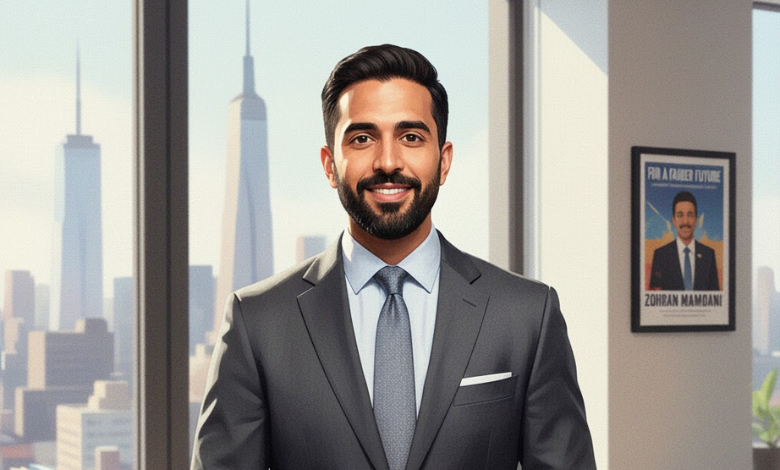
To understand the weight of the situation, it’s important to first understand the man at the center of it all. Zohran Kwame Mamdani was born in Kampala, Uganda in 1991 and moved to New York when he was just seven years old. Over time, he became a strong voice for working- class communities. Before entering the political limelight, he worked as a casing counselor, helping low- income families avoid eviction.
Mamdani made his mark as a progressive politician, representing Astoria in Queens in the New York State Assembly. He’s known for his unapologetic advocacy for tenants’ rights, public transportation reform, and community safety. His background as a community organizer and popular communist has made him a symbol of change and reform.
Unlike traditional political figures who frequently rely on law enforcement institutions for stability and control, Mamdani has questioned their overreach. He’s been oral about his belief that issues like crime, internal health heads, and poverty should not always fall on the shoulders of the police. Rather, he has pushed for a megacity model that prioritizes forestallment, internal health coffers, and social services.
This makes his heritage of the NYPD’s surveillance structure particularly complicated. He’s now responsible for a system that represents the veritable type of centralized power and overreach he has frequently blamed.
The NYPD’s Surveillance State What It Really Is
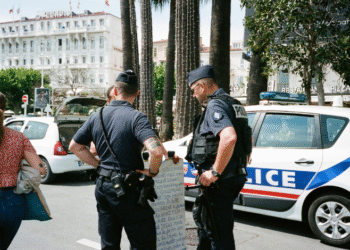
Let’s be honest, most New Yorkers have come so used to seeing cameras that we slightly notice them presently. But the scale of this system is stunning. The NYPD’s surveillance network is one of the most sophisticated in the world. It began as acounter-terrorism tool after the 9/11 attacks but has grown into a citywide digital monitoring conglomerate.
At the heart of this system is the sphere mindfulness System, developed in cooperation with Microsoft. This important network connects further than 18,000 CCTV cameras across the megacity, along with license plate compendiums , projectile detectors, body cameras, drones, and facial recognition technology. It’s able to recycle enormous quantities of data, from business patterns to individual individualities, in real time.
What started as a focused trouble to cover the megacity from terrorism has still evolved into an everyday policing tool. Cameras in galleries, on road corners, and across neighborhoods are now constantly collecting information about the millions of people who live, work, and travel through the megacity.
Still, breathing organisms, the surveillance system is like its nervous system always seeing, If you suppose of New York as a living. The problem is, many people really know how that nervous system operates, who controls it, and what happens to all the information it gathers.
What It Means That Mamdani Inherited It
The expression Mamdani inherited the surveillance state is not just a conceit, it’s reality. He did not make this system, but now he’s responsible for managing it. That’s both an honour and a burden.
That’s why it matters. The surveillance state is not just a set of cameras and waiters. It’s a political and ethical mystification. It involves questions of public safety, sequestration, translucency, and responsibility. Mamdani faces a serious dilemma: how can he uphold his values of justice and fairness while maintaining the megacity’s security structure.
The challenges ahead of him are enormous. The NYPD has a long history of defying oversight. Indeed after legislation needed the department to expose its use of surveillance technologies, reports show they’ve been slow and picky about compliance. There are also important interests involved from technology merchandisers to police unions all with a stake in keeping the system running exactly as it is.
Imagine inheriting a luxury auto with all the bells and hisses, but every button controls a commodity you do not completely understand. Some make the auto safer, others might make it dangerous. You’re told not to touch too important because it works OK . That’s basically what Mamdani faces with the NYPD’s surveillance system. He has to decide whether to drive it as- is or reprogram the machine entirely.
Civil Liberties and Public response
To grasp the full impact of this surveillance state, we’ve to look at how it affects real people. For numerous communities in New York, especially Muslim and indigenous neighbourhoods, surveillance has been a painful reality for times. Following 9/11, the NYPD ran covert programs that covered kirks, pupil groups, and original businesses. These sweatshops were later blamed for targeting individualities grounded on religion rather than substantiation of wrongdoing.
Civil rights lawyers have also raised enterprises about ethnic profiling and data abuse. The NYPD’s gang database, for example, has been shown to include knockouts of thousands of individualities, disproportionately youthful Black and Latino men. Numerous were added based on vague criteria similar to apparel colour or social media exertion. Critics argue that these practices criminalize communities rather than cover them.
On the other hand, NYPD officers frequently defend surveillance as a vital tool for public safety. They argue that cameras and analytics help help violent crime, help in examinations, and give substantiation that can excuse innocent people. Some everyday New Yorkers indeed say the presence of cameras makes them feel safer, particularly in crowded areas or in the shelter.
The variety is more nuanced. Surveillance can indeed discourage crime, but it can also erode trust between communities and law enforcement. When people feel constantly watched, they may change how they bear, indeed when they’re doing nothing wrong. That kind of cerebral weight living under an unnoticeable aspect changes what it means to be free.
Mamdani’s Possible Path Forward
So what can Mamdani really do. Reforming a system this settled is not easy, but there are several ways he could take.
He could start with translucency. That means forcing the NYPD to publish clear reports on what technologies they use, how data is collected, and how long it’s stored. Public checkups would go a long way in rebuilding trust. He could also push for stronger oversight by empowering mercenary review boards with further authority to hold the department responsible.
Another crucial step could be limiting data collection. Rather than gathering every piece of information just in case, the megacity could borrow a collect only what’s necessary approach. This would reduce the threat of abuse while still allowing essential tools to serve for genuine public safety purposes.
Mamdani might also take a hard look at the megacity’s contracts with tech merchandisers. These companies frequently hold tremendous control over data systems and software, and their agreements are infrequently transparent. By renegotiating contracts to insure public power of data, Mamdani could make a major step toward genuine responsibility.
Of course, change won’t come fluently. Police unions, megacity functionaries, and private merchandisers all have strong interests in maintaining the status quo. Reforming surveillance practices in New York City will take not only policy adaptations but also artistic change and a redefinition of what public safety really means.
My particular Take
I flash back one night walking home from a late regale in Queens, music in my cognizance, thoroughfares half-empty. I caught sight of a small red light blinking from a nearby lamppost. It was a surveillance camera. It sounded inoffensive, indeed cheering at first, but also the study hit me nearly, someone could be watching this footage, assaying it, storing it. Not because I did anything wrong, but simply because I live in the frame. That study unsettled me.
Moments like that make me realize how important the balance between safety and sequestration has shifted. Cameras can make us feel defended, but they can also make us feel exposed. It’s a strange contradiction of ultramodern life.
I do not believe surveillance is innately bad. habituated wisely, it can help break crimes, detect missing people, or discourage violence. But it must come with clear boundaries and honest oversight. Else, it becomes a silent form of control. The real question is not whether surveillance should live, but who controls it and how it’s used.
Mamdani’s leadership offers a stopgap for a more transparent approach. He has the background, empathy, and courage to challenge old systems. But whether he can overcome the political pressure and deeply hardwired structures of the NYPD remains to be seen. However, New York could come a model for balancing safety and freedom in the digital age, If he succeeds. However, the megacity pitfalls sliding further into a period of unnoticeable observation and eroded trust, If he fails.
The Bigger Question
At the end of the day, this story is not just about Zohran Mamdani or indeed New York City. It’s about a larger question every major megacity faces: How important is surveillance. How important sequestration are we willing to trade for the vision of safety.
The NYPD’s surveillance system will not evaporate overnight. It’s too vast, too expensive, and too integrated with the megacity’s diurnal operations. But what can change and what Mamdani has the power to impact is how it’s managed, covered, and justified.
Will he strike the corridor of it. Reform it, Or simply inherit it and carry on as ahead. That remains to be seen. What’s certain is that every decision he makes will ripple through the lives of millions of New Yorkers.
Still, this technology is no way neutral, If there’s one takeaway. Every camera, every detector, every algorithm reflects choices made by people, choices that affect how free we feel when we walk our own thoroughfares.
Mamdani’s test as a leader wo not just be about policy but about principle. Whether he chooses to constrain the surveillance machine or let it run on autopilot will reveal how seriously New York takes the idea of liberty in an age where the watchers no way blink.
Additional Resources
- Lefty NYC Mayoral Candidate Zohran Mamdani’s $1.1B ‘Public Safety Plan’ Panned by Policing Experts – New York Post: Provides a critical perspective on Mamdani’s proposed $1.1 billion safety initiative, with experts questioning its feasibility and its potential impact on NYPD operations.