

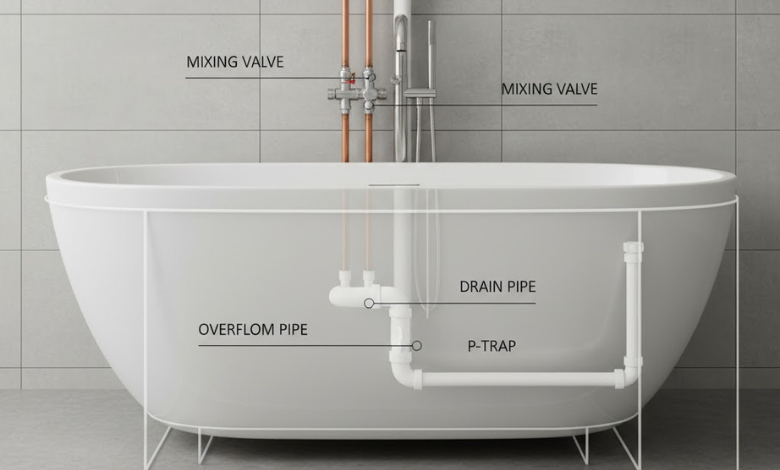
Bathtub plumbing diagrams clearly learn how drains, vents, and water lines connect for easy DIY repair or installation.
Before you snare that wrench or YouTube tutorial, let’s fantasize how your bathtub’s plumbing system actually works. Because once you see it easily, everything has additional thresholds to make sense.
If you’ve ever wondered where that water really goes after a long soak, this diagram is your roadmap. Think of it as the bathtub’s blueprint: the hidden network that makes sure your tub fills smoothly, drains cleanly, and does not smell like last week’s sink water.
Drain Assembly Explained
Let’s start where the magic (or mess) begins the drain.
At the bottom of your hogshead, that candescent essence circle is not just a draw; it’s the gateway to your home’s drainage system. Beneath it sits a drain shoe, a twisted fitting that connects the visible drain to the waste arm, which leads to the P- trap.
When you lift the breach, graveness takes over. Water rushes through the drain, down the shoe, and into the P- trap below. Simple, right. But then the thing is, the drain is your hogshead’s exit strategy, and if it’s indeed slightly deranged or congested, the whole system can back up faster than you’d anticipate.
Pro Tip: Always use a strainer to catch hair and debris before they hit the drain. It’s the cheapest insurance against future clogs.
How the Overflow Works
Ever notice that little metal plate near the top of your tub. That’s your overflow drain, and it’s there to prevent disasters.
Still, the overflow catches redundant water before it spills over the hogshead edge and cataracts your restroom, If you’ve ever left the gate running for just a nanosecond.
Inside the wall, a pipe connects the overflow to the main drain line. Together, they form what plumbers call a waste-and-overflow assembly a kind of safety net for distracted bathers.
I once ignored a slow-draining tub, thinking it was not urgent. A week later, I filled the bath, walked away for two minutes, and came back to water creeping across my tile. That little overflow saved me from a flooded nightmare.
Understanding the P-Trap
Now we’re getting to the heart of the system, the P-trap.
That U-shaped pipe beneath the hogshead might look odd, but it’s brilliantly designed. It holds a small quantity of water at all times, creating a seal that blocks seamster feasts from rising back over into your restroom. Picture it like a liquid doorkeeper friendly to clean water, hostile to bad oders.
Still, when the trap dries out( say, in an unused guest restroom), that hedge disappears, and you might notice a faint, unwelcome smell. It’s not your imagination, it’s seamster gas sneaking through.
Quick Fix: Pour a few cups of water down the drain every few weeks to keep the P-trap seal intact.
Vent Pipe and Airflow
Here’s the part most DIYers forget and the reason some bathtub drains gurgle like a coffee pot.
Every plumbing system needs air to flow freely. The articulation pipe connects the drainage system to your home’s roof articulation, equating air pressure so water can drain easily.
Without it, water can not move efficiently, kind of like trying to pour juice from a bottle without letting air in. The result, gurgling sounds, slow drainage, and indeed suction that can clear near P- traps.
So if your tub drain is slow and you’ve already ruled out clogs, the vent might be the hidden culprit.
Pro Tip: Never seal or cap a vent pipe. It’s your system’s breathing tube.
Hot and Cold Water Supply Lines
On the other side of the system the force lines. These pipes deliver clean water to your gate handles one for hot, one for cold.
They’re generally made of bobby, PEX, or CPVC and meet at the mixing stopcock, which blends the water to your preferred temperature before transferring it through the spout or rain diverter.
Think of it like a controlled symphony, each line delivering its part until you find that perfect “ not too hot, not too cold moment.
DIY Note: When replacing old lines, always shut off the main water supply first. A rookie mistake I learned the wet way.
How It All Connects
Now that we’ve covered the individual parts, let’s zoom out and see the full picture.
In a typical bathtub setup:
- Water enters through supply lines.
- It flows out the spout into your tub.
- Once drained, water passes through the drain shoe, then into the P-trap.
- The overflow drain connects to the same waste arm for safety.
- All wastewater moves into the main drain line.
- The vent pipe ensures steady airflow to keep everything moving and oder-free.
Understanding how each part works together helps you diagnose issues faster whether it’s a slow drain, a gurgling sound, or a mystery leak under the tub.
DIY Mini Guide: How to Replace a Bathtub Drain
If you’re feeling handy, here’s a simple walkthrough.
Tools You’ll Need
- Drain wrench or pliers
- Plumber’s putty
- Screwdriver
- New drain assembly
Step-by-Step
- Remove the old drain.
Use a drain wrench to wind it counter clockwise. However, apply a bit of piercing oil painting and stay a few twinkles, If it’s stubborn. - Clean the area.
Scrape off old putty and residue so the new seal will hold tight. - Apply plumber’s putty.
Roll a thin rope of putty and place it under the new drain flange. This ensures a watertight seal. - Install the new drain.
Tighten it clockwise until snug. Do not overdo it, overtightening can crack the tub surface. - Test for leaks.
Fill the tub halfway and check underneath (use a flashlight). If it’s dry, you’ve done it right.
Warning: Always double-check that the overflow gasket is intact. A loose overflow can cause hidden wall leaks over time.
Troubleshooting Common Bathtub Plumbing Problems
Slow Drain
Cause: Hair buildup or a partial clog in the P-trap.
Fix: Remove the stopper and use a plastic drain snake. Avoid harsh chemicals that can damage pipes.
Bad Odor
Cause: Dry P-trap or blocked vent pipe.
Fix: Pour water into the drain weekly, or call a plumber if vent issues persist.
Water Leaks Below the Tub
Cause: Faulty drain assembly or loose fittings.
Fix: Run a quick leak test and inspect the overflow and shoe connections.
Gurgling Sounds
Cause: Vent pipe blockage.
Fix: Check for obstructions like leaves or bird nests in the roof vent.
Pro Tip: Use silicone grease on rubber gaskets for easier installation and longer-lasting seals.
Bonus: Visual Learning Hack
(Optional Section: Embed or link a short 2D animation or explainer video)
Watching how water flows through each part can make the whole system click. Even a 60-second video helps you see the pressure and movement you can not observe in real life.
Adding multimedia (like video) keeps readers engaged longer, boosting your dwell time and overall search performance.
FAQs: Common Bathtub Plumbing Questions
1. What’s the standard bathtub drain size?
The utmost standard bathtub rainspouts are 1.5 elevation in periphery, though some ultramodern freestanding barrels use 2- inch rainspouts for briskly evacuating.
2. How far should the P- trap be from the drain?
Immaculately, within 24 elevations of the hogshead’s drain outlet to maintain a proper seal and help order leaks.
3. Can a bathtub share an articulation with a Gomorrah?
Yes but only if both institutions are on the same bottom and the connection meets plumbing law. Always check original structure regulations before combining reflections.
4. Why does my bathtub screech when my restroom flushes?
This generally means your venting system is incompletely blocked or small. When the restroom drains, it creates suction that affects the hogshead’s trap.
5. How frequently should I clean my bathtub drain?
Once every two to three months is ideal. Regular conservation prevents buildup and keeps water flowing freely.
Final Thoughts: Seeing the System Behind the Soak
When I first dived a bathtub plumbing form, I’ll admit it felt like decrypting a secret chart. Pipes faded into the wall, strange noises came from the bottom, and I had further questions than answers. But the moment I saw a clear bathtub plumbing illustration, everything clicked.
It’s not just pipes and fittings it’s a system of balance, pressure, and inflow. Each part, from the humble drain to the potent articulation pipe, plays a part in keeping your bath clean, safe, and odor-free.
So the coming time you’re soaking in warm water after a long day, take a moment to appreciate the retired network beneath you. Because that quiet plumbing system is doing a lot further work than you suppose.
Additional Resources
- Bathtub Plumbing Guide for Homeowners Roto-Rooter: A detailed guide on bathtub plumbing layouts, including labeled diagrams and professional repair tips for homeowners.